EN



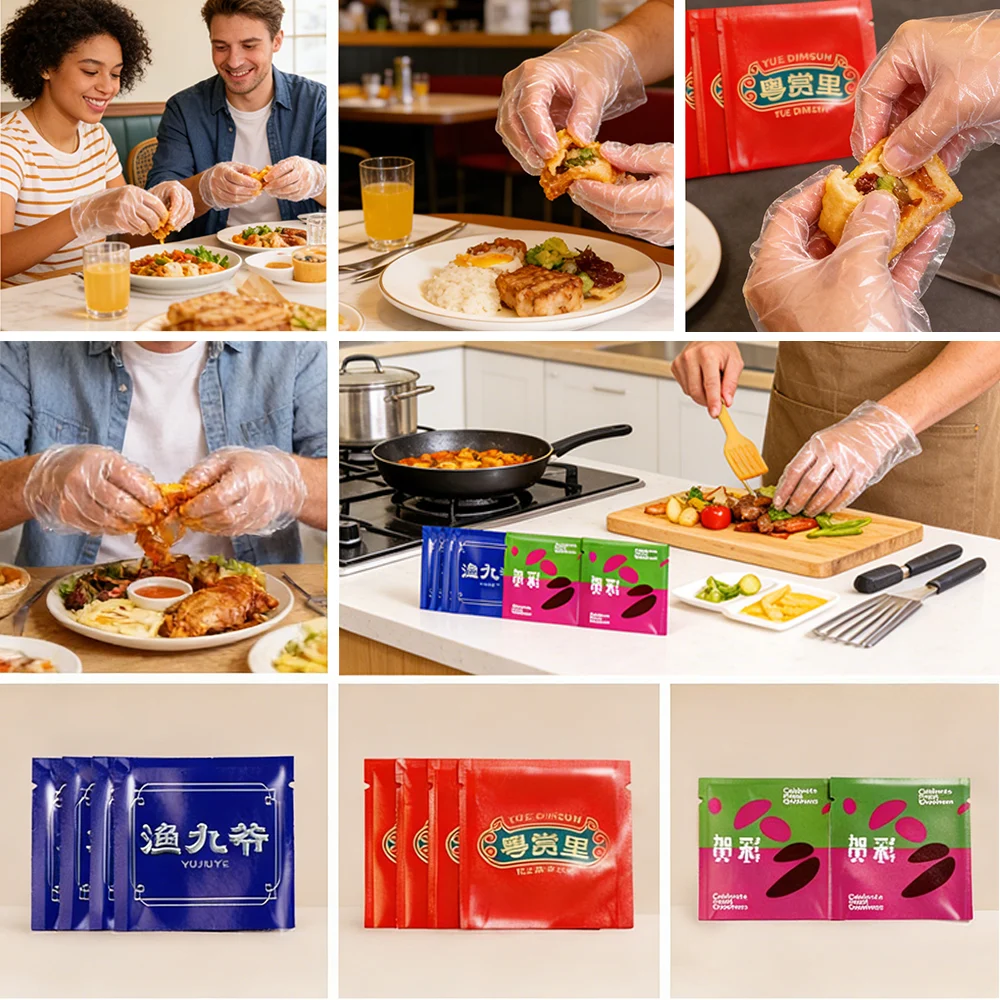
Every person who grabs hand held takeout food or sits down for casual barbecue meals rarely stops to think about invisible hygiene risks on the dining table. Most consumers assume food safety is fully managed inside restaurant kitchens, yet risks can still reach end users through small overlooked details. Field observations across hundreds of food service events show that poorly managed disposable food gloves become one under recognized source of cross contamination for diners. Many people hold a misleading belief that wearing any glove automatically creates complete safety, while public health records note that improper glove handling contributes to a measurable share of food borne illness incidents across global food service markets. Gloves serve as a protective barrier rather than a magic fix, and their actual protective effect depends heavily on material quality, packaging form and handling rules. For ordinary diners, the quality of disposable food gloves directly shapes hidden health exposure during fried chicken feasts, take out orders, street food gatherings and large scale banquets. Even clean looking hands carry surface bacteria, skin oils and residual substances, and disposable food gloves block direct transfer of these contaminants onto ready to eat dishes. Food service operators that overlook end user glove conditions may face avoidable customer complaints and reputational damage, even when kitchen preparation procedures follow standard operating rules.
Material science that defines real food safe performance
Not every plastic glove sold on market shelves qualifies for direct food contact, and surface appearance alone cannot tell reliable quality differences. High performance disposable food gloves are manufactured from virgin food grade polyethylene, which meets international food contact material standards and passes third party migration testing. This base material carries core physical advantages including chemical inertness, zero strange odor transfer and natural latex free composition. Odor transfer represents a subtle but real consumer pain point: low quality gloves made from recycled raw materials can release faint chemical smells that alter the natural flavor of seafood, grilled meat and baked pastries. Latex free construction also removes allergic reaction risks for sensitive groups, an important detail for multicultural consumer groups across different regions. Oil resistance is another practical technical feature worth noticing. Quality PE disposable food gloves maintain stable physical performance against greasy sauces and moderate temperature ready to eat food. Simple practical checks help buyers filter out unqualified products: qualified food safe gloves should carry clear food contact marking, produce no pungent plastic smell, and avoid brittle cracking under normal stretching. Skipping material verification brings hidden risks both for commercial catering operators and for every end consumer enjoying their meals.
Why individually wrapped construction changes end user hygiene outcomes
Standard bulk packed disposable food gloves bring obvious convenience for kitchen preparation work, yet they create unavoidable exposure risks once boxes get opened for public dining scenarios. After opening, loose gloves sit exposed to floating dust, ambient moisture and repeated hand contact from multiple staff or guests. Real world comparative observations show that open box storage gradually reduces baseline hygiene levels for remaining gloves inside the container, even if the facility keeps general kitchen sanitation under good control. Individually wrapped disposable food gloves solve this specific pain point by sealing each pair inside independent protective packaging until the exact moment of consumption. This structural design blocks secondary contamination during storage, transit and hand off to diners. Catering businesses can place single units on dining tables, drop wrapped gloves inside take out bags, or distribute them at outdoor food events without worrying about intermediate pollution. Beyond pure hygiene improvement, this design lifts overall customer experience. Guests receive untouched, fresh gloves every single time, which builds subtle trust toward restaurant brands. It is important to keep realistic expectations; individually wrapped formats do not cancel out all hygiene risks, but they sharply cut down contamination possibilities at the final consumer facing link of food service.
Fit and practical performance that shape real world user experience
Advanced material and packaging features deliver limited value if disposable food gloves feel awkward during actual eating activities. Consumer feedback collected from global catering markets repeatedly points out similar frustrations: gloves that tear when grabbing oily ribs, overly tight gloves restricting finger movement, or oversized gloves that slip off mid meal. These usability failures break down the intended protective barrier and create new contamination risks. Trustworthy disposable food gloves adopt ambidextrous design that fits both left and right hands. They feature well calibrated thickness to combine flexibility and tear resistance. Reasonable dimensional ranges cover different hand sizes among adult users across diverse ethnic backgrounds. Well fitted gloves stay nearly unnoticeable during use, allowing diners to focus entirely on food rather than constantly adjusting slipping or splitting gloves. Poor fit does not only annoy customers; torn gloves force unexpected interruptions and may leave tiny plastic fragments mixed with dishes. When catering operators select disposable food gloves for end user distribution, they should prioritize real world wearing performance instead of only chasing the lowest possible unit price.
Consistent quality and supply chain stability for long term service delivery
Consistency stands as one of the most undervalued metrics for disposable food gloves in commercial food chains. Batch to batch fluctuations on thickness, tensile strength or packaging sealing performance can trigger unexpected service troubles for restaurants and take out chains. A shipment with elevated tearing rates will drive rising customer complaints, raise waste volume and weaken brand impressions among end users. Strict multi stage quality control covers raw material incoming inspection, online production monitoring and finished goods sampling tests, which keeps product performance stable across large volume orders. Stable global supply chain capacity also prevents embarrassing stock out situations during peak dining seasons or large scale festival catering events. CW Package accumulates decades long industry experience focused on food contact disposable supplies, operating automated production workflows with complete quality management systems. The team maintains rigorous inspection procedures covering every production phase, and sustains reliable global shipment arrangements for hospitality and take out partners worldwide. Solid manufacturing infrastructure and mature supply chain execution help downstream food businesses deliver safer, more satisfying dining experiences for consumers from all cultural backgrounds.