EN



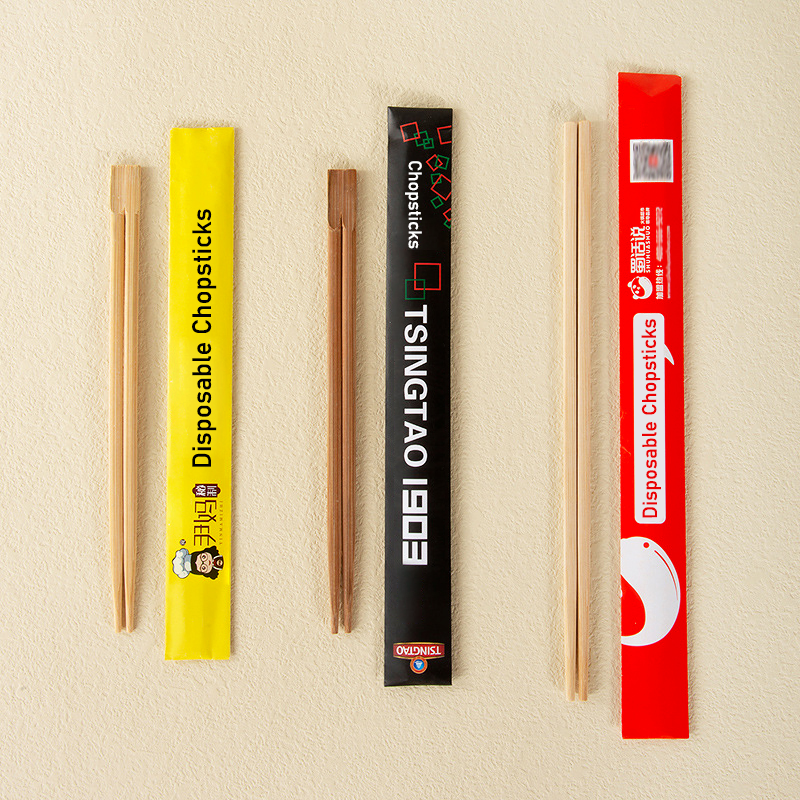
Why loose disposable chopsticks quietly undermine guest‑facing hygiene
At many guest‑serving locations, open storage bins hold unwrapped disposable chopsticks near service stations, where they are handled repeatedly throughout service hours. Loose disposable chopsticks often remain in these containers for extended periods. During amenity reviews with service groups and dining outlets, this storage setup was repeatedly linked to guest feedback about tableware presentation. Dust settles on surfaces, ambient moisture penetrates the material, and repeated hand contact creates unwanted contact points for food‑contact utensils.
Guests have no reliable way to confirm whether loose disposable chopsticks have stayed uncontaminated. This uncertainty affects how guests perceive overall hygiene standards across the venue. Many locations offering plated meals encounter this same concern, and thoughtful adjustments to tableware packaging can address these concerns without large‑scale overhaul.
Bamboo raw stock for disposable chopsticks and the grading question
Bamboo is widely used as raw material for disposable chopsticks for a straightforward reason: it reaches harvest maturity within a short growth cycle, unlike many slower‑growing hardwood alternatives. This renewable advantage only holds when processing standards are consistently followed.
Visual finish varies across product grades. Budget options may deliver less‑refined surface quality, while properly finished units offer smoother user experience. Carbonised bamboo options sit alongside natural bamboo for teams seeking a darker, uniform visual finish.
How individual wrapping protects disposable chopsticks from production to use
A sealed paper sleeve acts as the only physical barrier around each pair of disposable chopsticks after production, shielding them through pallet transport, warehouse storage and on‑site handling before a guest opens the package.
Paper sleeves are a common and practical choice. They provide enough protection against dust and moisture while remaining easy to open. Teams following responsible sourcing policies can select FSC‑certified paper sleeves to keep material sourcing traceable. Sleeve dimensions also matter. An oversized sleeve allows the disposable chopsticks to shift and separate before use.
For guests, individually wrapped disposable chopsticks send a clear signal about handling protocols. The sealed package shows that the disposable chopsticks remain untouched after packing. This subtle signal shapes guest perception of care around food contact items.
Packaging waste against bamboo renewability
Sustainability assessments for disposable chopsticks often focus only on the bamboo material, while overlooking packaging impact. A renewable raw material does not automatically offset the environmental footprint of wrapping, and buyers who rely on this simplified assumption miss important details.
Wrapper specification is a major factor influencing total waste output. Thick, multi‑layer or oversized sleeves add extra material that weakens the environmental benefit of bamboo. Slim, well‑fitted paper sleeves deliver the required protection while limiting extra waste. Paper‑based packaging also simplifies waste sorting for venues.
Third‑party supporting documentation is valuable for procurement teams. Chain‑of‑custody records offer verifiable evidence when sustainability claims are reviewed. General green statements without supporting documentation create credibility gaps when disposable chopsticks are audited.
A field checklist for buyers sourcing wrapped disposable chopsticks
Unit pricing alone is not a reliable standard for evaluation. Three practical checks help identify potential issues before confirming orders.
Request samples matching the exact specification of the disposable chopsticks quoted, rather than generic display samples. Examine the surface closely for splinters, raised grain or sharp edges, which are noticeable to end users. Test the sleeve to confirm it opens cleanly. A sleeve that is difficult to open creates an awkward experience for guests. Finally, review batch information, and compare data against stock held in storage.
Batch consistency is a key consideration for multi‑site operations. Quality may meet expectations on approved samples, while later shipments show unexpected variation. Comparing incoming samples against a reference sample and maintaining dry storage conditions helps keep quality steady across all locations.
Supply reliability behind long‑term disposable chopsticks programmes
Buyers have varied ordering needs. Small service operators may place periodic moderate orders, while larger venue networks require consistent shipments of identical specifications across many locations. Stable, repeatable quality supports unified guest experience standards.
Chengwang maintains established production lines for individually wrapped disposable chopsticks and matching paper sleeves, covering natural and carbonised bamboo. FSC‑certified paper and ISO management system standards are applied throughout production. This manufacturing foundation supports buyers who require consistent specification and steady delivery across multiple sites, with custom print options and pre‑production sample support.
For teams evaluating single‑use tableware options, individually wrapped bamboo disposable chopsticks address practical hygiene concerns. They leverage renewable material properties and fit into structured procurement workflows for many guest‑serving environments. Reach out for samples if you are planning your next tableware procurement project.