EN
EN



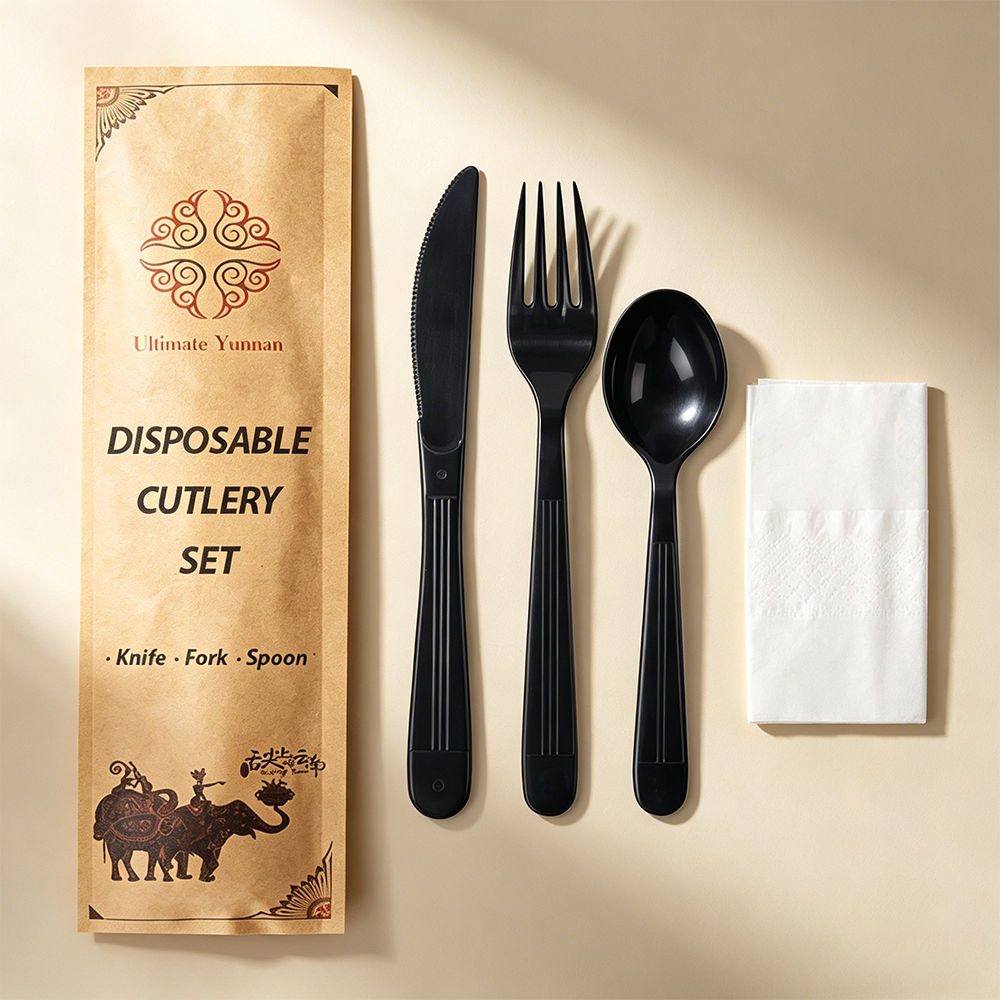
Performance des matériaux : adapter les sets de couverts jetables au type d’aliment et aux exigences liées au transport
Le choix du bon set de couverts jetables pour votre menu à emporter exige une attention particulière portée au comportement de chaque matériau dans des conditions réelles. La température des aliments, leur teneur en huile et la durée du transport influencent toutes la performance des couverts — un mauvais choix peut entraîner la casse des ustensiles, des fuites ou une insatisfaction client.
Résistance à la chaleur, à l’huile et à l’humidité : essais critiques pour les plats chauds et les sauces
Les plats chauds et les sauces grasses mettent rapidement en évidence les faiblesses des couverts. Les fourchettes en plastique standard peuvent ramollir ou se déformer lorsqu’elles sont utilisées pour servir des nouilles fumantes ou des sautés gras, tandis que les alternatives en bois ou en fibres de bambou conservent leur intégrité structurelle à haute température. La résistance à l’humidité est tout aussi importante : par exemple, la bagasse non traitée peut devenir molle lorsqu’elle reste en contact prolongé avec des soupes ou des currys. Les entreprises qui servent des aliments chauds, humides ou gras doivent privilégier des matériaux éprouvés pour résister à la chaleur, à l’huile et à l’humidité — et tester les couverts avec les plats réellement proposés au menu avant de passer une commande en gros.
Comparaison des matériaux durables — PLA, bagasse, fibres de bambou et amidon de maïs dans l’usage réel à emporter
Le passage away des plastiques à usage unique a introduit plusieurs alternatives populaires, mais leurs performances varient considérablement dans les contextes de livraison à emporter. L’acide polylactique (PLA) est d’origine végétale et transparent, mais sa résistance à la chaleur est faible : il commence à se déformer au-dessus de 45 °C, ce qui le rend inadapté aux plats chauds. La bagasse, fabriquée à partir de fibres de canne à sucre, offre une excellente résistance à la chaleur et à l’humidité, mais peut être fragile sous pression. Les couverts en fibre de bambou allient grande durabilité et résistance naturelle à la chaleur, bien qu’ils soient légèrement plus lourds. Les options à base d’amidon de maïs offrent souvent un bon équilibre entre rigidité et compostabilité, mais peuvent se dégrader plus rapidement en contact avec des liquides chauds. Le tableau ci-dessous résume les principaux compromis :
| Matériau | Résistance à la chaleur | Résistance à l'humidité | Durabilité | Coût typique |
|---|---|---|---|---|
| PLA | Faible (≤ 45 °C) | Moyenne | Moyenne | Moyenne |
| Bagasse | Haut | Haut | Moyenne | Faible–Moyen |
| Fibre de bambou | Haut | Haut | Haut | Moyenne |
| Fécule de maïs | Moyenne | Moyenne | Moyenne | Moyenne |
Pour les entreprises de livraison à emporter, adapter le matériau à la carte est essentiel : le PLA léger convient aux desserts froids ou aux salades, tandis que les articles en fibre de bambou répondent à la fois aux objectifs de durabilité et de respect de l’environnement pour la plupart des plats chauds, sauceux ou copieux.
Conception optimisée pour la livraison à emporter : étanchéité, portabilité et expérience client
Durabilité en mouvement : prévenir la casse, la déformation ou les fuites pendant la livraison
Les commandes à livrer passent souvent plus de 30 minutes en transit — chaque composant d’un ensemble de couverts jetables doit donc résister aux chocs, à l’empilement et aux variations de température. Une enquête consommateurs menée en 2025 a révélé que 84 % des acheteurs considèrent la résistance aux fuites comme essentielle dans les emballages pour plats à emporter. Pour les couverts, cela signifie que les fourchettes et les cuillères ne doivent pas se casser sous la pression exercée par des récipients lourds, et que les pièces individuellement emballées doivent être dotées de scellés fiables afin d’empêcher toute pénétration d’humidité. Des matériaux légers mais rigides — tels que le bagasse à épaisseur accrue ou le PLA renforcé — réduisent la déformation et la casse, tandis que des manches ergonomiques munis de motifs nervurés améliorent la prise en main pour les clients en déplacement. L’emballage à preuve de manipulation, jugé essentiel par 79 % des consommateurs, protège contre toute ouverture accidentelle durant la livraison — réduisant ainsi directement les réclamations et les retours liés aux déversements.
Stratégies d'emballage pour les sets de couverts jetables : personnalisés, emballés individuellement et regroupés de manière éco-responsable
Un emballage intelligent transforme les couverts jetables en un point de contact avec la marque. Des pièces emballées individuellement garantissent l'hygiène et la preuve d'intégrité — désormais attendue par 79 % des consommateurs. Pour les entreprises de restauration à emporter, des emballages personnalisés imprimés avec des logos ou des messages sur la durabilité renforcent l'identité de la marque sans générer de déchets supplémentaires. Le regroupement éco-responsable — par exemple, l'association de couverts avec des serviettes fabriquées à partir de fibres recyclées — simplifie la manipulation pour les livreurs et améliore l'expérience de déballage. Les packs de couverts empilables permettent de gagner de l'espace de stockage et accélèrent le conditionnement dans les cuisines numériques, tandis que des matériaux légers mais robustes contribuent à réduire les coûts d'expédition. En associant fonctionnalité et habillage subtil de la marque, les entreprises renforcent la fidélité client tout en répondant aux attentes croissantes en matière de solutions durables, étanches et pratiques.
Certifications, conformité et garantie de sécurité sanitaire pour les sets de couverts jetables
Comprendre les normes EN 13432, ASTM D6400 et la certification BPI — Que garantissent réellement ces certifications
Trois certifications majeures vérifient qu’un ensemble de couverts jetables est véritablement compostable et sûr pour le compostage industriel. La norme EN 13432 est la référence européenne exigeant une biodégradation complète, une désintégration totale et l’absence de résidus toxiques dans des conditions contrôlées. L’ASTM D6400 remplit un rôle équivalent aux États-Unis, en garantissant que les plastiques compostables se dégradent entièrement dans les délais spécifiés. La certification BPI (Biodegradable Products Institute) confirme la conformité à la norme ASTM D6400 ainsi que l’acceptation du produit dans les installations commerciales de compostage. Ces labels ne garantissent pas la compostabilité domestique ni un impact environnemental nul, mais ils attestent que le produit ne laissera pas de microplastiques nocifs dans le compost — ce qui réduit les risques juridiques et renforce la confiance des consommateurs soucieux de l’environnement.
Essais de non-toxicité et de migration : explication des exigences de la réglementation européenne 10/2011 et du CFR 21 de la FDA
Au-delà de la compostabilité, la sécurité sanitaire des aliments repose sur des limites strictes en matière de migration chimique. Le règlement (UE) n° 10/2011 fixe des limites globales de migration (LGM) et des limites spécifiques de migration (LSM) pour les substances susceptibles de passer des couverts vers les aliments. Aux États-Unis, la FDA, dans le titre 21 du Code of Federal Regulations (CFR), parties 175 à 178, définit des exigences équivalentes pour les matériaux destinés au contact avec les aliments. Les produits conformes ne libèrent aucun niveau nocif de métaux lourds, de phtalates ou de PFAS. Les fournisseurs réputés fournissent des rapports d’essai établis par des laboratoires accrédités tels que SGS ou TÜV Rheinland. Un jeu de couverts jetables certifié et testé pour la migration ne remplit pas seulement les obligations réglementaires, mais rassure également les exploitants de restaurants et les consommateurs quant à l’absence de contamination des aliments — renforçant ainsi la confiance dans l’engagement de votre marque en faveur de la sécurité et de la qualité.
FAQ
Quels facteurs dois-je prendre en compte lors du choix de couverts jetables pour mon activité de livraison à emporter ?
Prenez en compte des facteurs tels que le type d’aliment, la température, la teneur en huile et le temps de transport. Assurez-vous que le matériau des couverts jetables correspond aux besoins de votre menu tout en résistant à la chaleur, à l’humidité et à la pression pendant la livraison.
Quel matériau est le plus adapté pour les aliments chauds, gras ou lourds ?
Les fibres de bambou et la bagasse à grammage élevé constituent d’excellentes options, car elles offrent une excellente résistance à la chaleur, à l’humidité et à la pression.
Quelles sont les principales alternatives aux couverts jetables en plastique ?
Les alternatives populaires comprennent le PLA, la bagasse, les fibres de bambou et l’amidon de maïs. Chaque matériau présente des avantages spécifiques, tels que la compostabilité, la résistance à la chaleur ou la durabilité.
Pourquoi l’étanchéité est-elle importante dans la conception des couverts jetables ?
L’étanchéité garantit la durabilité pendant le transport, évite les fuites et préserve une expérience client de haute qualité pour les commandes à emporter et les livraisons.
Table des matières
- Performance des matériaux : adapter les sets de couverts jetables au type d’aliment et aux exigences liées au transport
- Conception optimisée pour la livraison à emporter : étanchéité, portabilité et expérience client
- Certifications, conformité et garantie de sécurité sanitaire pour les sets de couverts jetables
-
FAQ
- Quels facteurs dois-je prendre en compte lors du choix de couverts jetables pour mon activité de livraison à emporter ?
- Quel matériau est le plus adapté pour les aliments chauds, gras ou lourds ?
- Quelles sont les principales alternatives aux couverts jetables en plastique ?
- Pourquoi l’étanchéité est-elle importante dans la conception des couverts jetables ?