EN
EN




News
Disposable Food Gloves — A Critical Safeguard for Catering Food-Safety Upgrades
Industry Focus | Food Safety & Catering Supply Chain
Against rising global demand for dining hygiene, terminal food-service details have moved into the industry’s spotlight. Disposable food gloves, widely used for take-away, barbecues, street food and banquets, suffer from widespread misconceptions and inconsistent product quality. Recent field surveys and public-health data reveal that poor materials, inadequate packaging and incorrect glove handling contribute to cross-contamination and food-borne illnesses, driving supply-chain upgrades for this basic catering commodity.
Industry Misconception: Gloves Offer Protection, Not Absolute Safety
Many consumers and operators assume that wearing any glove eliminates hygiene risks. Hundreds of food-service field observations contradict this belief: even sanitised hands carry bacteria, skin oils and residues. Substandard gloves fail to block transfer of these contaminants to ready-to-eat food.
Notably, restaurants with compliant kitchen workflows may still face customer complaints and reputational harm from poor-quality end-user gloves. Industry experts note gloves act only as a protective barrier. Real-world safety depends on material grade, packaging and proper handling rather than wear alone.

Material Benchmark: Virgin Food-Grade PE Drives Quality Improvements
Visual appearance cannot verify food-contact safety. Many low-cost market gloves use recycled feedstock and fail international migration-test requirements for direct food contact.
Premium compliant disposable food gloves use virgin food-grade polyethylene, certified for food contact via third-party testing. Key benefits include chemical inertness, zero off-gassing odour and latex-free construction. Odour-free performance preserves the natural taste of seafood, grilled meats and baked goods, while the latex-free formula removes allergy risks for diverse consumer groups.
Qualified PE gloves also deliver dependable oil resistance for greasy sauces and moderately hot food. Buyers should check for clear food-contact labelling, absence of harsh plastic smell and resistance to brittle cracking under normal stretching. Skipping material verification creates risks for both caterers and diners.
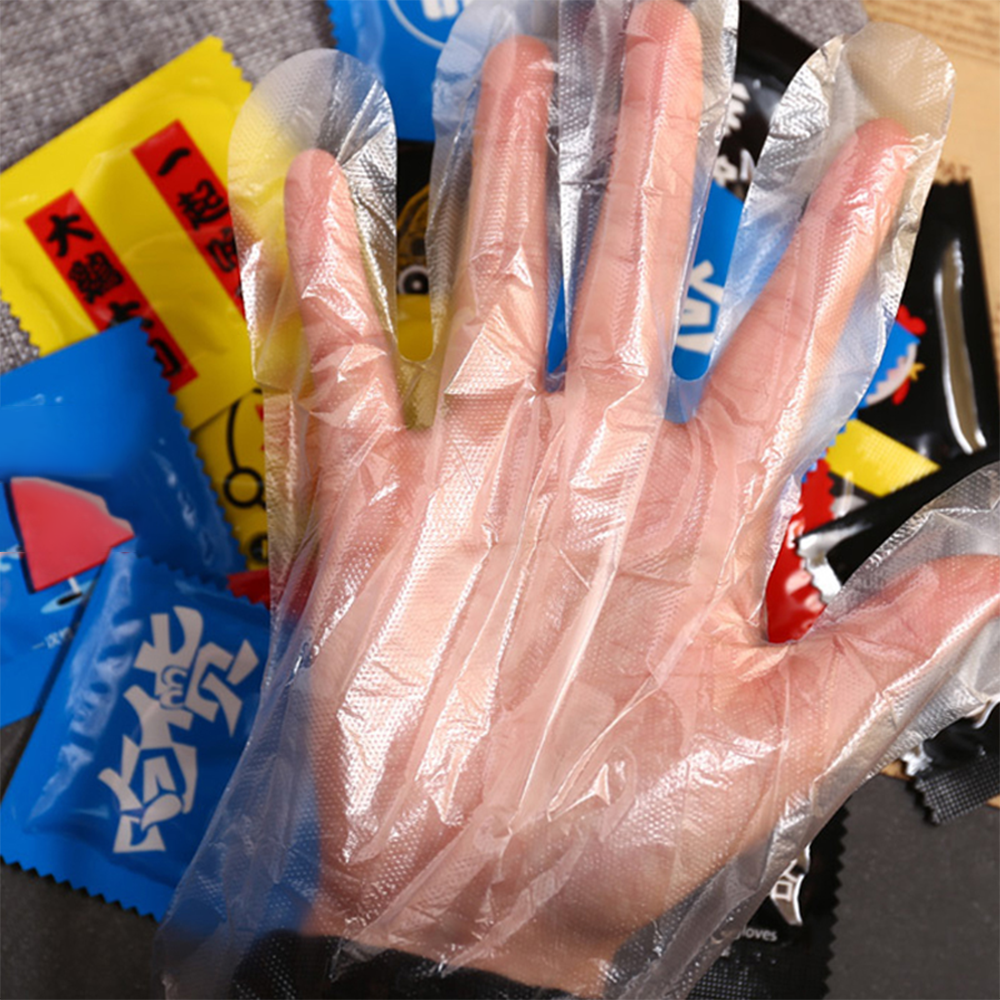
Packaging Advance: Individually-Wrapped Gloves Reduce Secondary Contamination
Bulk-packaged gloves suit in-kitchen preparation yet carry hygiene risks in public-dining, take-away and outdoor events. Once opened, loose gloves are exposed to dust, moisture and repeated human contact. Even well-maintained kitchens see declining baseline hygiene for remaining gloves stored in open boxes, per comparative industry tests.
Individually-wrapped gloves seal each pair until use, blocking contamination through storage, transit and hand-over to guests. Operators may place single units on tables, tuck them into take-away bags or distribute them at outdoor functions. Beyond better hygiene, fresh untouched gloves strengthen brand trust. While individual wrapping cannot eliminate every hazard, it drastically cuts contamination risks at the final consumer-facing step.

Usability Matters: Fit & Durability as Key Procurement Metrics
Safety certification means little if gloves perform poorly during actual meals. Global catering feedback highlights common pain-points: tearing with oily food, tight fit restricting finger motion, or oversized gloves slipping off. Such failures break the protective barrier and introduce new contamination risks.
Quality gloves feature an ambidextrous design with calibrated thickness balancing flexibility and tear resistance. Sizing accommodates varied adult hand shapes across regions. Well-fitted gloves require minimal adjustment during eating. Torn gloves cause service disruptions and may leave micro plastic fragments in food. Procurement teams are advised to prioritise real-world wear performance instead of chasing the lowest unit price.
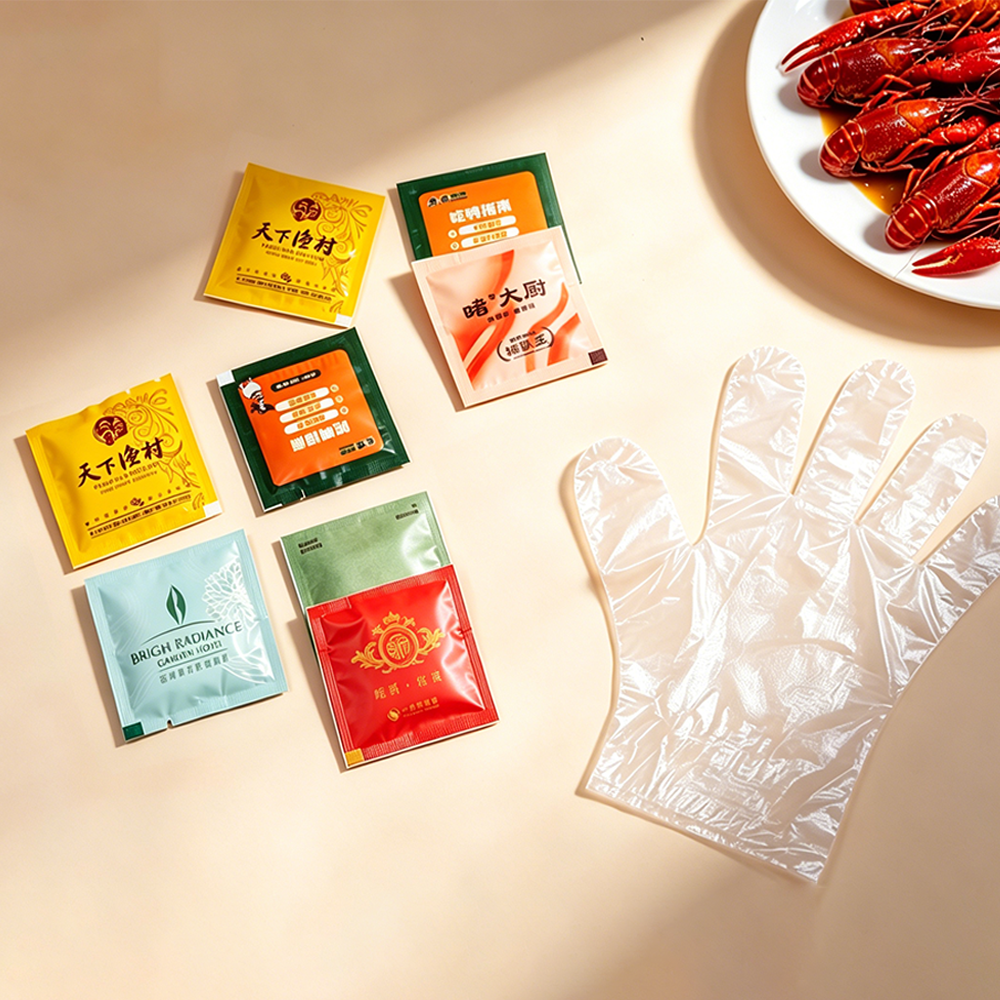
Supply-Chain Consistency Supports Long-Term Catering Operations
Batch-to-batch inconsistency remains an under-recognised pain point for chain restaurants and take-away operators. Variations in thickness, tensile strength or seal integrity raise tear-out rates, fuel complaints, increase waste and damage brand perception.
Reliable quality requires multi-stage controls: incoming raw-material inspection, in-line production monitoring and finished-goods sampling. CW Package draws on decades of experience with food-contact disposables, running automated lines under full quality-management systems. Rigorous phase-by-phase inspection plus established global shipping prevent stock-outs during peak seasons and festival-scale catering. Robust manufacturing and dependable logistics enable downstream hospitality businesses to deliver safer, more satisfying dining experiences for worldwide consumers.